



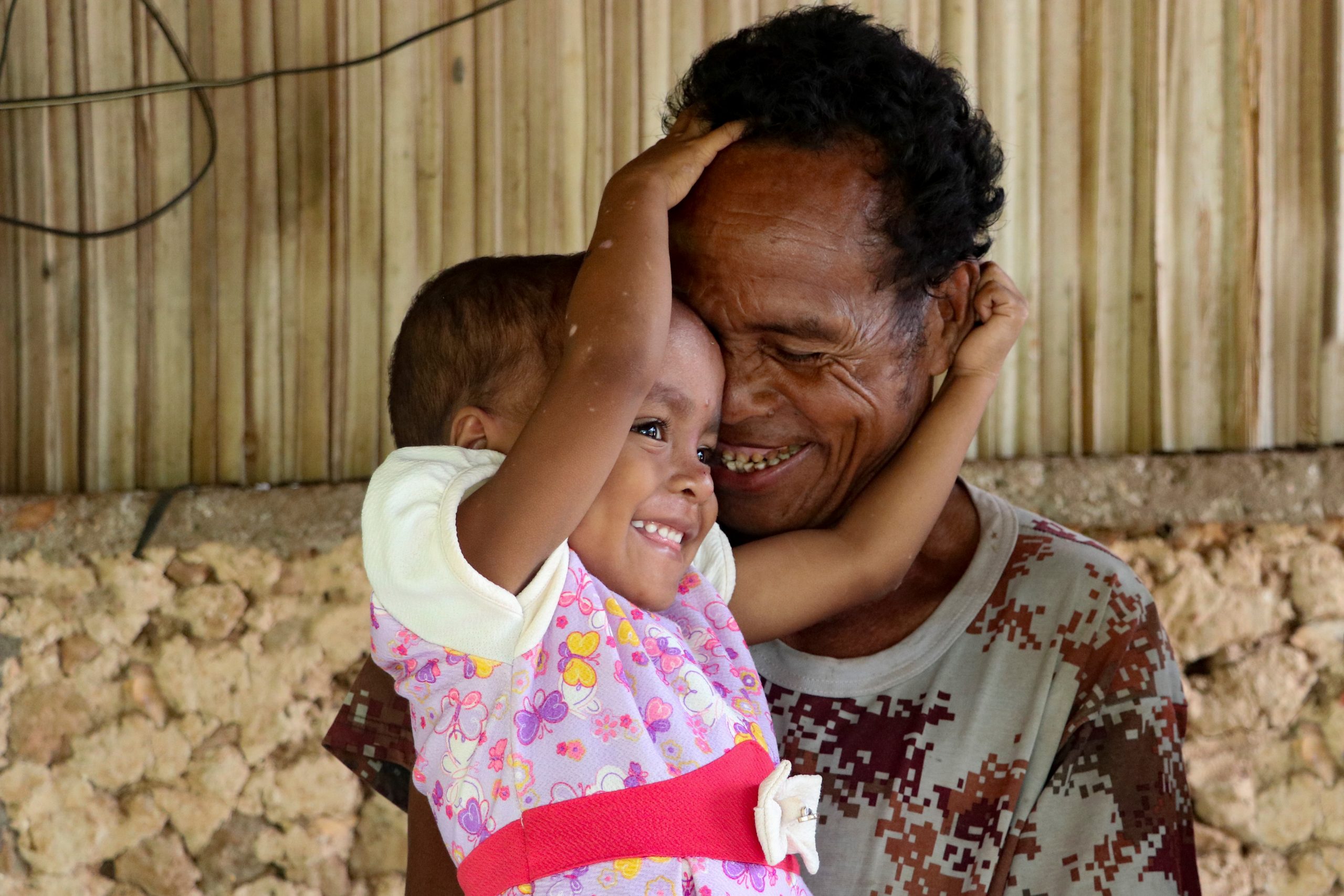
Lidio da Silva and his wife Marie da Silva sit in front of their house in Libagua village in Timor Leste. Marie has been part of the CRS TOMAK nutrition project for 6 months. They have 3 children aged 3 and 1-year old twins.
The da Silva family are farmers who grow primarily maze and beans. After participating with the CRS nutrition program, they have changed what they eat as a family. In addition to maize and rice, they now buy meat and fish once a month. They have added carrot, eggs, cassava and pumpkin leaf from the market. This is sometimes challenging because they generally eat what they grow. They will only purchase food at the market when they have money. Since the program, they have learned to prioritize their spending toward food.
Background
Timor-Leste has the highest rate of child malnutrition in Asia with almost half of children under five stunted (low height for age). Research shows that rates of exclusive breastfeeding vary widely across the country (28-75%) and there is a lack of dietary diversity with only 13% of children under two years consuming a minimum acceptable diet. On a national level, widespread poor growth is attributed to limited availability of nutritional foods and high child illness burden. Previous research conducted in two (upland and lowland) populations in rural Timor-Leste indicates growth faltering in early development. In Timor-Leste, subsistence agriculture is the main livelihood strategy for the majority of the rural population. Subsistence in Timor-Leste is predominantly plant-based, with staple crops including rice, cassava, maize and beans. The country is food insecure, thus household nutritional security is difficult to achieve.
TOMAK (To’os ba Moris Di’ak, or Farming for Prosperity) is an agricultural livelihoods and nutrition program supported by the Australian Government in Timor-Leste. CRS is working with local partners and communities to improve production of nutritious vegetables promoting appropriate nutrition for all age groups and increase access to savings and lending through SILC.